The Digital Lag Behind Building Administration
Komuniteti Team
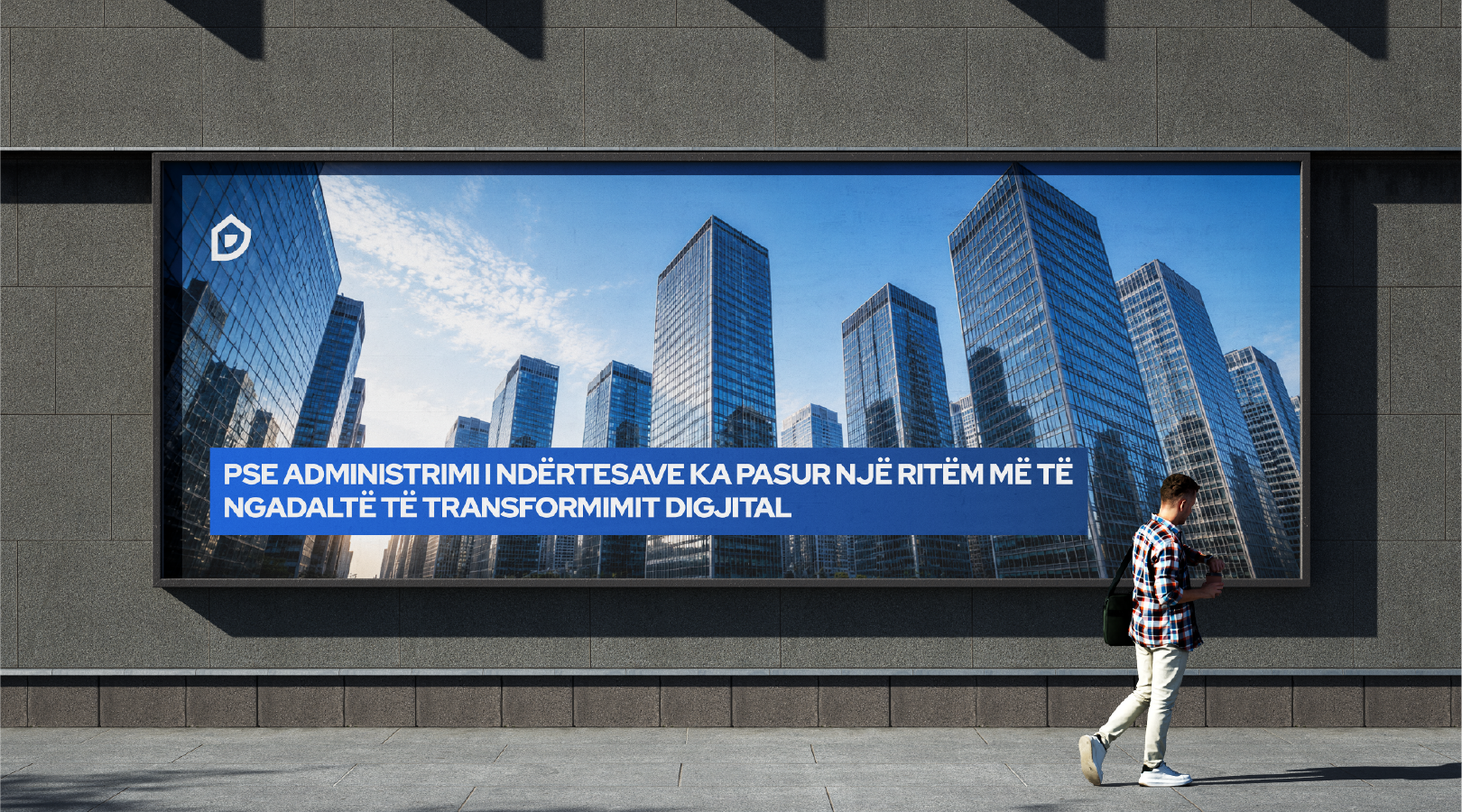
While technology has reshaped how businesses operate across nearly every industry, building administration in Albania has been slower to make that shift. For years, administrative processes have relied on manual practices, communication through phone calls or general-purpose messaging apps, and paper-based records. Over time, these habits became the norm and, in many cases, remain the standard way buildings are managed today.
Building administration is inherently complex, requiring constant coordination and the management of many interdependent tasks. That complexity is precisely why digital solutions for this sector have been slower to emerge: building a platform capable of addressing such varied administrative needs in one place, while still making day-to-day operations more organized and efficient, has proven far from straightforward.
Building Administration Is Far More Complex Than It Appears
Managing a building involves several interdependent processes, including finances, communication, maintenance, documentation, and collective decision-making among residents. These processes typically affect one another, since a single event within a building can require parallel action across several areas, such as informing residents, defining responsibilities between the administrator and the management company, addressing costs, and keeping records for future reference.
This interdependence is what makes building administration a process requiring constant coordination across multiple areas at once. When that coordination is missing, information becomes difficult to track and the links between processes break down, reducing transparency and making it harder to clearly define responsibilities between the administrator, the management company, and residents.
How Building Scale Affects Administration
Another factor is the variation in scale and layout across buildings, ranging from a single building with a handful of apartments to large complexes with multiple entrances and hundreds of units. The number of entrances, units, and residents has a direct impact on the volume of administrative work involved. This variation has shaped the need for a digital system capable of adapting to different building structures and sizes, so it performs just as well for a small building as it does for a large, multi-unit complex.
Traditional Administration and the Limits of Fragmented Information
For years, administration has relied on a mix of tools such as phone calls, WhatsApp messages, Excel spreadsheets, paper records, and notices posted at building entrances. Each of these has served a specific purpose, but the information they produce holds its value only temporarily and loses relevance over time.
For administrators and management companies, this means information has to be tracked down manually across several different sources, since there's no record documenting the history of decisions, payments, and maintenance work. Without a centralized system, every verification takes extra time and increases the chance of errors or oversights, particularly as the number of buildings or units under administration grows. This way of working became established over the years and turned into the standard administrative routine, not because it was efficient, but because there was no structured alternative to cover all these needs at once.
Adapting to Digital Administration
The shift from traditional processes to digital administration has been shaped by the fact that many people have relied on manual methods for years. As technology has become more accessible and residents' expectations for transparency, communication, and efficiency have grown considerably, more and more people are showing openness to adopting more structured tools.
Setting a New Standard for Administration
Community was built as a solution that directly addresses the challenges of manual administration, bringing administrative processes into a single, centralized, and traceable system suited to buildings of any size or structure.
Management companies and administrators manage units and resident payments from a single dashboard, overseeing multiple buildings at once, generating invoices, and tracking unpaid dues. Residents, in turn, can view their payment history, make payments directly through the app, and receive notifications straight to their account instead of relying on fragmented communication. Maintenance issues are reported, tracked, and documented within the same platform, from the initial report through to resolution.
Community thus provides the digital structure that has so far been missing from building administration in Albania, establishing the standard for modern administration.
Tags: