Blog e articoli

Notizie e approfondimenti

Resta aggiornato con notizie, guide e storie del nostro team.

Tutti
Udhëzues Praktik
Digjitalizimi i Administrimit
Ligji për Bashkëadministrimin
Pagesat & Financat
Problemet e Administrimit
Administrimi i Ndërtesave

15 articoli

Unpaid building management fees and the restrictions that may apply
Administrimi i Ndërtesave
Ligji për Bashkëadministrimin
Unpaid building management fees and the restrictions that may apply

Property owners are responsible for paying building management fees. When these fees remain unpaid, owners may face late payment charges as well as restrictions on selling, gifting or mortgaging their property until the outstanding balance is settled. These restrictions apply only when the legal conditions are met and the required procedure has been followed. Albania’s Law No. 55/2025 on the management of jointly owned property in buildings sets out when these measures can be taken, the responsibilities of each party and how restrictions are removed after payment. Understanding these rules helps owners, building administrators and management companies handle outstanding fees with accurate information and a clear understanding of their roles. Payment deadlines and late payment charges Under Article 33, the owners’ assembly determines how and when building management fees must be paid. If a payment is overdue, a charge equal to 30% of the fee applies for each month of delay. Owners who qualify for special legal status and protection under applicable legislation are exempt from this charge. Reporting and verifying outstanding fees If overdue fees and the associated late payment charges remain unpaid into the third month, building administrators or management companies must notify the owners’ board and assembly in writing. The assembly consists of all unit owners in the building. The board is elected by the assembly to represent the owners and carry out the responsibilities assigned by law. Article 33 also requires a list of owners with unpaid fees, together with the amounts owed, to be displayed on the building’s premises. The board verifies and determines the outstanding fees and late payment charges. Understanding property restrictions and their implications for owners A restriction is entered in the property register and prevents certain transactions involving the property until payment of the outstanding balance has been confirmed. These include selling or gifting the property, granting rights to use it, or placing a mortgage or other encumbrance on it. Owners retain ownership of their property, and the restriction itself does not provide for eviction. Its purpose is to secure the unpaid debt by preventing the relevant property transactions until the balance is settled. Conditions for requesting a property restriction Alongside debt recovery procedures, the law allows a restriction to be registered against a property to secure outstanding payments. Under Article 34, building administrators or management companies may apply to the State Cadastre Agency when management and maintenance fees have remained unpaid for at least 12 months, or when the outstanding debt reaches at least 0.5% of the unit’s value. Either condition is sufficient. If the debt reaches the 0.5% threshold, there is no requirement to wait until 12 months have passed. For a property valued at ALL 10 million, for example, the threshold would be ALL 50,000 in unpaid fees. Meeting either condition allows the procedure to begin; it does not automatically trigger a restriction. Prior notice, a board decision and supporting documents submitted to the Cadastre are required. The third-month notification requirement for overdue payments is a separate step and should not be confused with the conditions for requesting a property restriction. Notice and approval of the restriction The notice must identify the owners with outstanding payments, the amount owed and the property concerned. It must also explain that the restriction requires a decision approved by a qualified majority of the board’s members, with building administrators or management companies authorised to submit the application to the Cadastre. Supporting documents include the approved decision, evidence of the outstanding debt and proof of the identity of the administrator or management company. Under Article 34, the restriction must be registered within 15 days once the application and supporting documents have been submitted and the cadastral fees have been paid. Fees for unoccupied properties Owners remain responsible for building management fees even when they do not live in their properties. Article 11 also provides for payment when units are rented out. Article 14 states that owners of unused units must contribute to the management and maintenance of jointly owned property on the same basis as other owners, unless the owners’ assembly decides otherwise. Leaving a property vacant therefore does not automatically exempt it from management fees. Any reduction or different arrangement for unused units requires a decision by the owners’ assembly. Removing the restriction after payment Once the accumulated debt has been settled, owners may apply to have the restriction removed by submitting bank confirmation of payment. Article 34(5) states that no further board decision is required. The State Cadastre Agency must remove the restriction from the property register within five days of receiving confirmation that the debt has been paid. The importance of accurate payment records For building administrators and management companies, reliable records of charges and payments for each unit are essential to verifying outstanding balances. Payment deadlines, amounts received and remaining balances need to be clear, while notices, decisions and supporting documents should be kept organised. This helps provide owners with accurate explanations and prepare the documentation needed for legal procedures. Community brings charges, payment tracking and document management together in one platform. Building administrators and management companies can access the information needed to verify payments, while residents can view their outstanding balances and the costs of relevant services. Any legal action must follow the applicable requirements for notices, authorisations and decisions. This article draws on SkyWeb.al’s reporting of 23 October 2026 and Albania’s Law No. 55/2025 on the management of jointly owned property in buildings.
24 ottobre 2026
Moving beyond manual processes to coordinate staff and manage building services
Administrimi i Ndërtesave
Digjitalizimi i Administrimit
Moving beyond manual processes to coordinate staff and manage building services

Building management requires management companies, building managers and staff to work together to coordinate services and meet residents’ needs. Alongside scheduled work, they also need to address issues reported by residents. Community Albania brings staff coordination, work planning and record keeping together in one platform. Management companies and building managers can manage tasks, track progress and access relevant information across one or more buildings. Coordinating staff and responsibilities Management companies and building managers can organise work and assign staff to carry it out directly within the platform. Issues reported by residents can be linked to the services needed to resolve them. Staff can access their assigned tasks, while management companies and building managers can see how work is distributed across the team. Progress updates help everyone stay coordinated, particularly when services are being carried out across several buildings at the same time. Planning work and setting deadlines Management companies and building managers can schedule work and services across buildings and set completion deadlines. For recurring services, dates and frequency can be planned in advance on a weekly, monthly or annual basis. Residents can be kept informed about upcoming services, reducing the need for repeated individual requests for information. As work progresses, the platform helps managers track progress against deadlines and identify tasks that are still in progress or overdue. Keeping records of work and costs Community Albania provides a dedicated section for each service, where relevant details and costs can be recorded. Staff can submit supporting evidence of completed work, allowing management companies and building managers to verify that the service has been delivered. All records remain accessible in the platform’s history whenever needed. These records are particularly useful when an issue reoccurs. Managers can review how it was previously addressed and consider a different approach if necessary. This documented information also helps guide decisions when similar issues arise. Staff coordination, work planning and record keeping are closely connected parts of building management. Community Albania brings these processes together in one platform, helping management companies, building managers and staff collaborate and manage services in line with residents’ needs.

16 ottobre 2026
How resident-reported issues are managed on the platform, from assigning responsibility and tracking progress to documenting the completed work.
Administrimi i Ndërtesave
Problemet e Administrimit
Udhëzues Praktik
How resident-reported issues are managed on the platform, from assigning responsibility and tracking progress to documenting the completed work.

In today’s fast-paced world, residents expect timely action when they report a problem in their building, while building managers handle multiple issues raised by residents. As time passes, residents want to know that their reports have been acknowledged and that the problems will be resolved within a reasonable timeframe. Building managers are responsible for services that directly affect residents’ daily lives. Alongside their other responsibilities, they need to prioritise the work, assign staff and keep track of deadlines. As workloads increase, so does the risk of mistakes and delays. Community brings these needs together, helping residents stay informed and get building issues resolved while enabling building managers to work more efficiently. Staff carrying out the work are part of the same process, and management companies can monitor progress and maintain service quality as they grow. So how does the platform support a building issue from the moment a resident reports it to the completion of the work? Reporting building issues Residents can report problems in their building through their dashboard and indicate their priority. The information provided helps building managers assess the situation and plan the necessary work. Residents can follow progress on the platform and receive automatic notifications whenever there is an update on the issue they reported. Comments from building managers explain what is being done, reducing the need for repeated requests for information. Coordinating the work Building managers are notified when residents report building issues and review the information to determine what work is required. They organise the response by assigning responsibilities to staff and setting completion deadlines based on the needs of each issue. As work progresses, building managers keep residents informed about the actions being taken to resolve the problem. Residents receive automatic notifications whenever an update is made. Management companies can also access information about assigned tasks, deadlines and work progress. This helps companies and building managers coordinate staff and identify tasks that need attention to stay on schedule. Keeping residents informed Automatic notifications keep residents informed while their building issues are being addressed, without the need to contact building managers repeatedly for answers. Whenever building managers update an issue, the information is shared with residents through the platform. This makes communication more direct and reduces repeated requests for updates. Documenting completed work Once the work is complete, recording the details and associated costs creates a maintenance history that supports expense tracking and future planning. Building managers and management companies can refer to these records when issues recur or further work is needed. The value of this process lies in how it supports everyone involved. Residents need to know that the building problems they report are being addressed, receive relevant information and get the service they need. Building managers need to organise work, keep track of responsibilities and coordinate the response more efficiently. Staff carrying out the work benefit from clearly defined tasks and the information they need to complete them. This helps them understand what is expected and work more effectively with building managers. For management companies, visibility into task progress, completed work and costs helps maintain service quality as their operations grow. Community was created to make everyday work easier and enable communication and collaboration around a shared goal of delivering reliable services that meet residents’ needs.

16 ottobre 2026
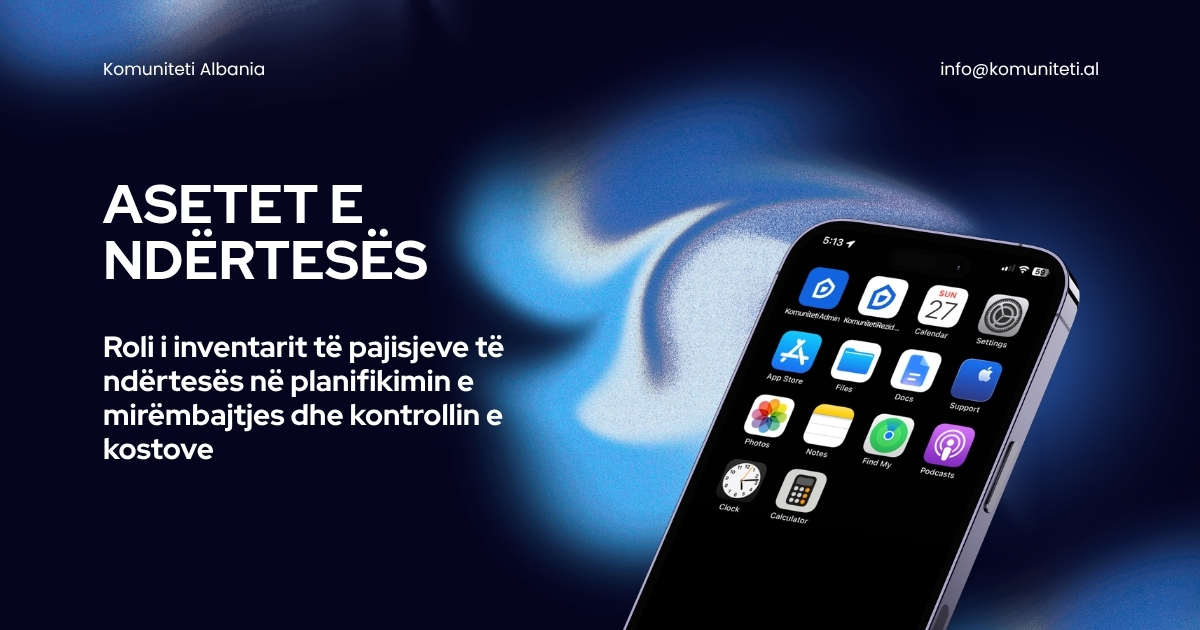
How building equipment inventory supports maintenance planning and cost control
Administrimi i Ndërtesave
Problemet e Administrimit
Digjitalizimi i Administrimit
How building equipment inventory supports maintenance planning and cost control

Identifying recurring maintenance issues Keeping a record of work carried out on building equipment provides a clear history of when issues occurred and how they were addressed. When the same issue comes up again, these records make it easier to see what work was carried out in each case. Over time, this information can help identify recurring patterns and their possible causes, while providing a more complete record of each asset’s condition and maintenance history. Anticipating future building maintenance needs Maintenance records collected over time can help anticipate future maintenance needs. The timing and frequency of previous work can indicate which assets require regular attention and when another intervention may be needed. This allows maintenance to be scheduled before an issue develops into a more complex repair, supporting a more proactive approach to managing building equipment. Deciding between repair and replacement Equipment that requires frequent repairs can become a recurring expense for a building. In these cases, previous interventions and their associated costs can provide useful context when assessing whether further repairs are still reasonable or whether replacement should be considered. Managing maintenance costs and planning the budget Keeping records of building expenses makes it possible to track maintenance costs over time. This can show where spending has been concentrated and which interventions have resulted in recurring costs. The information can then be used as a reference when estimating future funding needs, taking previous costs, regular maintenance requirements and planned work into account. As a result, budget planning can be based on documented expenses and the identified maintenance needs of the building. Organized equipment records provide information that can be used throughout the maintenance process. From identifying recurring issues to planning future work and assessing costs, documented information provides continuity in how a building’s maintenance needs are tracked and how maintenance decisions are made.

16 ottobre 2026
Maintaining continuity when building management changes
Problemet e Administrimit
Digjitalizimi i Administrimit
Maintaining continuity when building management changes

We often assume that payments, invoices, contracts, and documents relating to our property have been properly recorded and stored. When we need a payment receipt, a copy of a contract, or details of an earlier expense, we turn to the building manager expecting those records to be available and verifiable. The building manager holds an important part of the building’s history, from financial records to resolved and ongoing issues. This information may be needed at any point and should remain available even when building management changes. Transferring information and responsibilities to a new building manager When a building manager leaves, the information recorded during their time in the role needs to be passed on to whoever takes over. A proper handover involves more than transferring documents. It also requires a clear account of ongoing matters and the actions already taken. However, the incoming manager may not always receive a complete or usable set of records. Messages may have been exchanged through the previous manager’s personal phone, payments tracked across different spreadsheets, and documents kept in paper files or on devices that are no longer accessible. Even when these materials are handed over, inconsistent file names and filing methods can make it difficult to identify which information is current and which documents are no longer valid. Information stored across multiple apps and files When records are stored across different apps and files, they have to be collected and reviewed individually after a change in management. In some cases, it may be unclear where specific information is stored, who recorded it, or which version of a document is the most recent. There may be evidence that an issue was reported or a payment was made, but not enough information to establish what happened afterward. As a result, matters that were previously addressed may need to be reviewed again, and residents may be asked to resubmit documents or confirmations they have already provided. This becomes more difficult in buildings with many units, where new payments, invoices, and documents are added every month. Why documentation matters when payments need to be verified The importance of reliable documentation becomes clear when a previous payment or outstanding balance needs to be verified. If the relevant record is unavailable, a resident may be asked to prove that a payment was made, even though recording it was part of the building’s administration. Without verifiable records, there may be uncertainty over outstanding balances, and a resident could even be asked to make the same payment again. Keeping building records available during management transitions Payments, documents, and previously addressed issues remain available even when building management changes. Community records this information on one platform, allowing administrative responsibilities to be transferred using the building’s existing records.

16 ottobre 2026
How a growing building portfolio affects management organization and coordination
Administrimi i Ndërtesave
Digjitalizimi i Administrimit
How a growing building portfolio affects management organization and coordination

As the number of buildings under management increases, so does the volume of responsibilities, ongoing tasks, and information that needs to be handled. A structure that works well for a limited number of buildings can become increasingly difficult to coordinate as operations expand. At this stage, internal organization and the way information is shared across teams have a direct impact on the consistency of management. Community provides a shared structure for handling these demands, helping growing operations remain coordinated and sustainable. Team coordination and task management As more buildings are added, the number of tasks that need to be followed simultaneously also increases for the teams involved in their management and day-to-day operations. Effective coordination therefore depends on clearly assigned responsibilities and a shared way of tracking what has been completed and what still needs attention. Community helps organize these responsibilities within a single platform, allowing each team member to follow the tasks assigned to them. This makes it easier to maintain effective collaboration and coordination as operations expand. Allocation of responsibilities across buildings Not every building requires the same level of attention at the same time. Issues, maintenance needs, and other obligations vary from one building to another, making prioritization increasingly important as the portfolio grows. Community allows tasks to be organized by building and responsibilities to be assigned to the appropriate team members. This creates greater clarity around ownership and helps staff focus their attention where it is needed most. Monitoring progress through centralized information When several buildings are managed at once, information spread across messages, documents, and different communication channels can make ongoing work harder to follow. Community brings together information related to reported issues, interventions, documentation, and other management data in one shared environment. This allows progress to be followed from a single platform, without having to repeatedly search for or reconstruct information whenever it is needed. As activity increases, having information centralized in this way helps maintain continuity across the management workflow. Overall activity oversight Managing a growing number of buildings requires a broader view of operations, rather than isolated information about each property. Through Community, management can oversee ongoing work from a centralized point, with visibility into tasks, responsibilities, and matters that require attention. This provides a stronger basis for assessing priorities and making informed decisions about how operations should be organized as they grow. In this way, a larger portfolio can be managed without losing structure or consistency. Managing an expanding number of buildings requires responsibilities to remain clearly defined and relevant information to remain readily available. Community supports this growth through a unified structure that gives both staff and management a shared basis for following day-to-day activity. This allows operations to scale while preserving consistency, continuity, and a clear organizational structure.

13 agosto 2026
Pagina 1 di 3

Scopri Komuniteti, la piattaforma che ridefinisce l'amministrazione di immobili per aziende e residenti. Con un'interfaccia semplice e funzioni su misura, migliora il lavoro, il rispetto delle regole e l'esperienza dei residenti.

Vivi il futuro dell'amministrazione immobiliare con Komuniteti.

Social
Scarica la nostra app
Ministero dell'Economia e dell'InnovazioneStartup Albania
Con il sostegno di Grant 2026La piattaforma Komuniteti è realizzata con il sostegno finanziario del governo albanese attraverso il Ministero dell'Economia e dell'Innovazione, nello schema Grant 2026, ed è attuata dall'Agenzia Innovation4Albania.